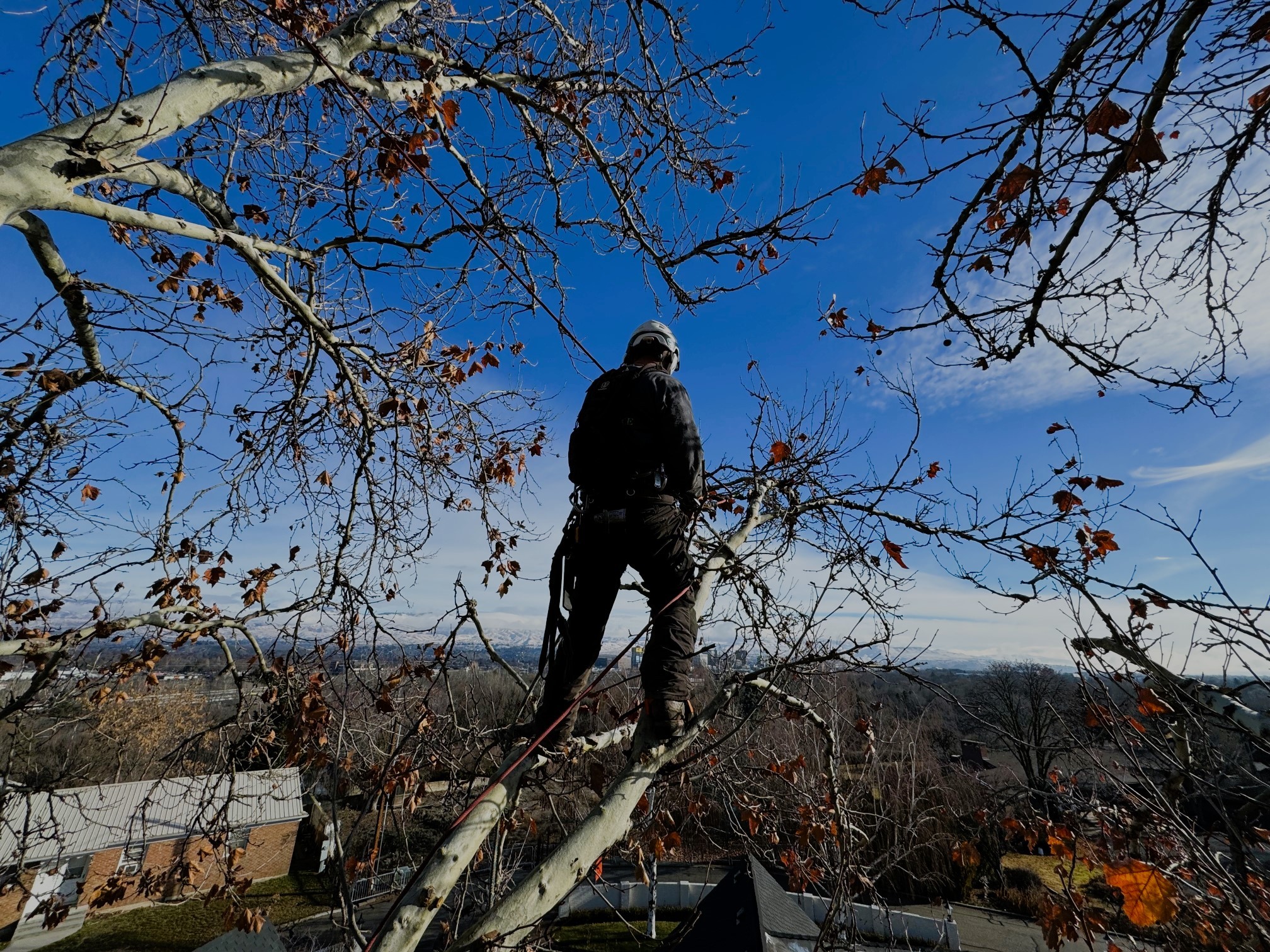
Cabling and Bracing vs. Removal: When a Damaged Tree Can Actually Be Saved
A split trunk or a major crack in a large limb looks like a death sentence for a tree. Often it isn’t. Cabling and bracing is one of the most underused tools in residential tree care, mostly because most homeowners don’t know it exists as an option before someone tells them removal is the only fix.
Here’s how to tell which situation you’re actually in.
What Cabling and Bracing Actually Does
Cabling and bracing is a structural support system installed in a tree to reduce stress on weak points, usually a split trunk, a codominant stem (two main trunks growing from roughly the same point), or a heavy limb at risk of breaking under its own weight.
Cabling involves installing dynamic synthetic cables or static steel cables at the proper height in the canopy. These cables connect at least two major limbs or stems so they support each other, reducing the chance of one snapping away from the other in wind or under heavy snow or ice loads.
Bracing uses rigid steel rods, typically installed lower in the trunk through a split or crack, to physically hold the two sides together and prevent further separation.
Both procedures are performed by a certified arborist trained to assess potential points of structural failure and follow ANSI A300 standards. Cabling and bracing can bej frequently used together on the same tree, depending on its structural needs.
When a Tree Is a Good Candidate for Cabling and Bracing
Not every damaged tree qualifies. The trees that respond well to cabling and bracing usually share a few traits:
The trunk and root system are otherwise healthy. Cabling and bracing supports a structural weak point. It doesn’t fix decay, disease, or a failing root system. If the rest of the tree is sound, the support system can genuinely extend its life by years.
The split or crack is recent and hasn’t progressed too far. A new crack from a storm or heavy wind is a better candidate than one that’s been slowly widening for several seasons, since older splits often come with more internal decay that limits what hardware can actually fix.
It’s a tree worth the investment. Cabling and bracing is most commonly used on large, mature shade trees, especially ones with sentimental or significant landscape value, where removal would mean losing decades of growth. It’s less commonly worth doing on a young tree that could simply be replaced.
The codominant stems or heavy limbs are positioned where failure would be high-risk. A tree with a split that overhangs a house, driveway, or area where people regularly walk is a strong candidate, since the support system reduces the risk of that exact failure happening.
When Removal Is the Better Call, Even If Cabling Looks Possible
Cabling and bracing isn’t a universal fix, and a good, ethical arborist will tell you when it’s not worth doing.
Removal becomes the better option when there’s significant trunk decay or fungal growth at the base, since hardware can’t compensate for wood that’s already structurally compromised from the inside. It’s also the better call when the root system shows signs of failure, when the tree has already lost a large percentage of its canopy, or when damaging pests have moved into a tree that’s already stressed, since supporting a declining tree mechanically doesn’t address what’s actually killing it.
There’s also a cost-versus-value conversation worth having honestly. Cabling and bracing isn’t free, and on a smaller or less significant tree, the cost of installation and the periodic inspections it requires afterward may not make sense compared to removal and, if wanted, planting something new.
What the Decision Actually Looks Like in Practice
This is one of the few tree care decisions that genuinely benefits from an in-person evaluation rather than a phone estimate. An arborist needs to assess the trunk, check for decay using tools such as a resistance drill or sounding mallet, evaluate the root zone, and look at the tree’s overall structure before recommending cabling, bracing, or removal. Photos alone often don’t show what’s actually happening inside the wood.
If cabling and bracing is installed, it’s not a one-time fix and forget. The hardware and the tree’s growth around it should be inspected periodically, since trees continue growing and the support system needs to be checked to make sure it’s still doing its job correctly as the tree changes shape.
Get a Real Evaluation Before Assuming the Worst
A cracked or split tree looks alarming, but it’s not automatically a removal. Double J Tree Service sends ISA Certified Arborists to evaluate structural damage in person, throughout Kuna and the greater Boise metro including Meridian, Eagle, and Nampa, and we’ll give you a straight answer on whether cabling and bracing can save the tree or whether removal is genuinely the right call.
If you’ve got a split trunk or a limb that’s worrying you, don’t wait on it. Storm season and summer wind make weak points worse, not better, over time.