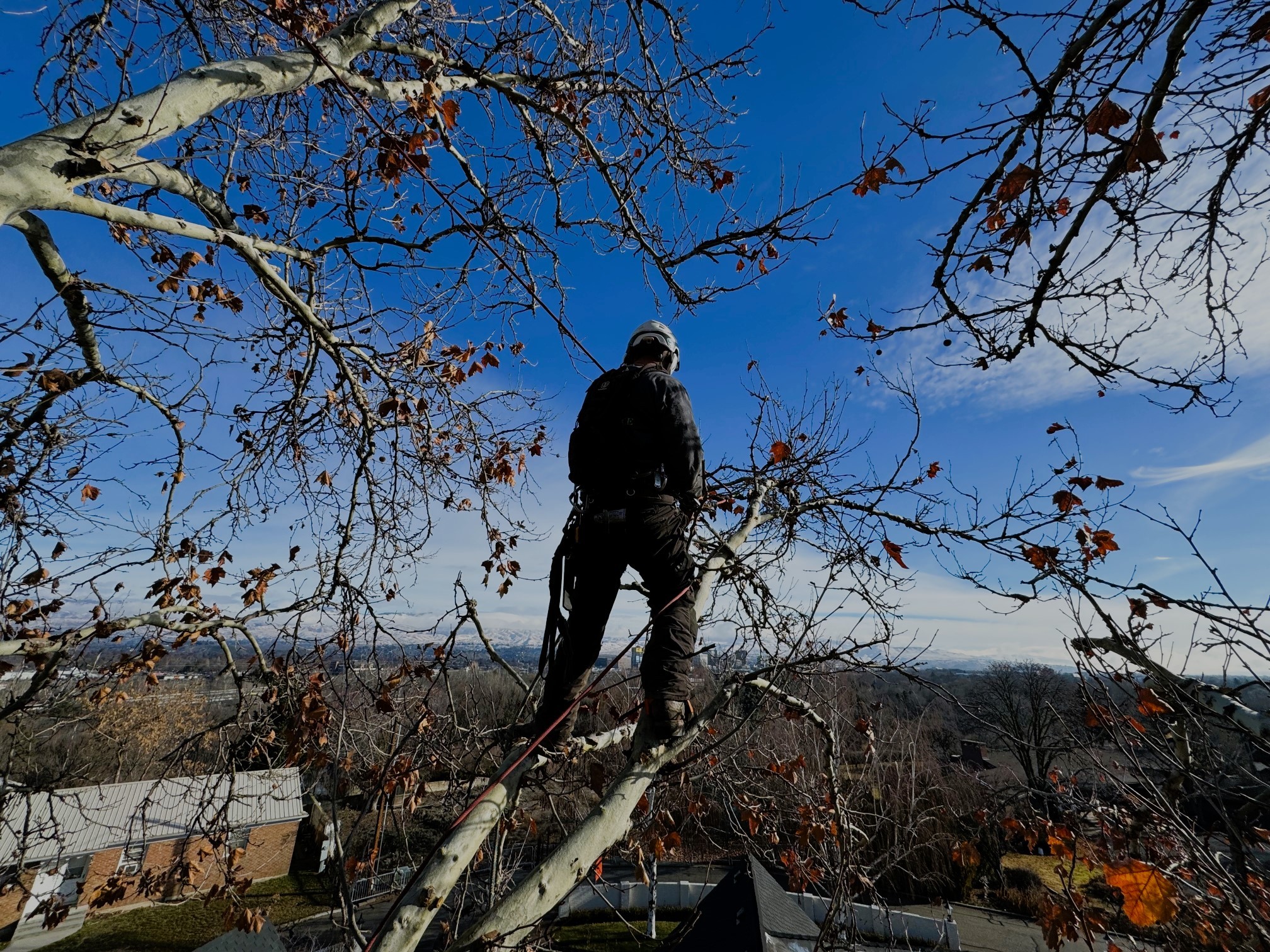
ISA Certified Arborist vs. Landscaper or Handyman
What’s the Real Difference for Tree Work
“My landscaper can do it” is one of the more expensive sentences in tree care. Not because landscapers and handymen don’t know what they’re doing in their own lane, but because tree work is a different discipline entirely, with its own science, risks, and standards that general lawn and property maintenance simply doesn’t cover.
Here’s what actually separates an ISA Certified Arborist from the person who mows your lawn or fixes your fence, and why it matters more than it looks like it should.
What “ISA Certified Arborist” Actually Means
ISA stands for the International Society of Arboriculture, and certification through them shouldnt be a marketing label, it’s a credential earned through documented experience plus a comprehensive exam covering tree biology, identification, risk assessment, proper pruning and removal techniques, soil science, and pest and disease diagnosis.
Certified arborists are required to maintain the credential through continuing education, which means the knowledge stays current as new pest threats, diseases, and best practices emerge. That matters in a region like ours, where the threats trees face (drought stress, bark beetles, the looming concern of emerald ash borer, the overwhelming saturation of companies that DO NOT practice proper industry standards) are specific to our climate and change over time.
What a Landscaper or Handyman Brings to the Table
Landscapers and handymen aren’t unskilled, they’re just trained for different work. A landscaper’s expertise is in design, lawn health, irrigation, and the overall look of a property. A handyman’s strength is general repair and maintenance around the house. Both are valuable for what they do.
The problem comes from scope creep. Cutting down a small ornamental tree or trimming a low hedge falls within general handiness. Assessing whether a 60-foot tree near your house has internal decay, determining if a leaning tree’s root system is failing, or deciding whether a damaged tree needs cabling and bracing or full removal requires a different kind of expertise that general lawn and property work doesn’t train for.
The Risk Assessment Gap
This is where the real difference shows up. A certified arborist is trained to evaluate a tree’s structural risk: trunk integrity, root health, canopy balance, decay indicators, and how all of that interacts with wind, weight, and proximity to your house. That assessment happens before a single cut is made.
A landscaper or handyman without that training is generally working off visual judgment and general experience, which is fine for small, low-stakes jobs but becomes a real liability on anything involving a large tree, a structurally compromised tree, or work happening near power lines, your roof, or your foundation.
The cost of an incorrect risk assessment isn’t hypothetical. It’s a tree that gets topped instead of properly reduced (weakening it for years afterward), a hazard tree that gets trimmed instead of removed (leaving the actual risk standing), or a healthy tree that gets removed unnecessarily because nobody recognized it could’ve been saved with varying mitigation of risk techniques.
Insurance and Liability
This is the part people skip until something goes wrong. Tree work, especially anything involving height, heavy limbs, or rigging, carries real risk of property damage and injury. A licensed, insured tree service carries liability coverage specifically for that risk. If a general landscaper or handyman without that coverage damages your house, your neighbor’s fence, or gets hurt on your property, you may be exposed in ways your homeowner’s insurance doesn’t fully cover.
Always ask directly: is the company insured specifically for tree work, and can they show proof. A legitimate tree service will have this ready without hesitation.
Equipment Differences
Proper tree work often requires equipment that general landscaping crews simply don’t carry: rigging systems for controlled limb removal, aerial lifts or climbing gear for working safely at height, stump grinders, and chippers for processing brush removal efficiently. Without the right equipment, jobs that should take hours stretch into days, or get done in ways that are riskier than they need to be.
When a Landscaper Is Genuinely Fine
To be clear, you don’t need an arborist for everything. General yard cleanup, small ornamental shrub trimming, and basic brush removal from low growth are reasonable for a landscaper or handyman to handle. The line is height, size, and structural uncertainty. If you’re asking “is this tree healthy” or “could this branch fail,” that’s an arborist question, not a landscaping one.
How to Actually Check
Ask directly whether the person doing the work is an ISA Certified Arborist, or whether a certified arborist is involved in assessing the job even if someone else performs the physical labor. You can also verify certification status directly through the ISA’s credential lookup. It takes two minutes and removes all doubt.
Get the Right Expertise the First Time
Double J Tree Service is built around ISA Certified Arborists handling every assessment, not just the cutting. We serve Kuna and the greater Boise metro, including Meridian, Eagle, and Nampa, and we’re fully insured for the work we do. If you’ve got a tree job that feels bigger than “general yard work,” talk to us before it becomes a bigger problem than it needed to be.