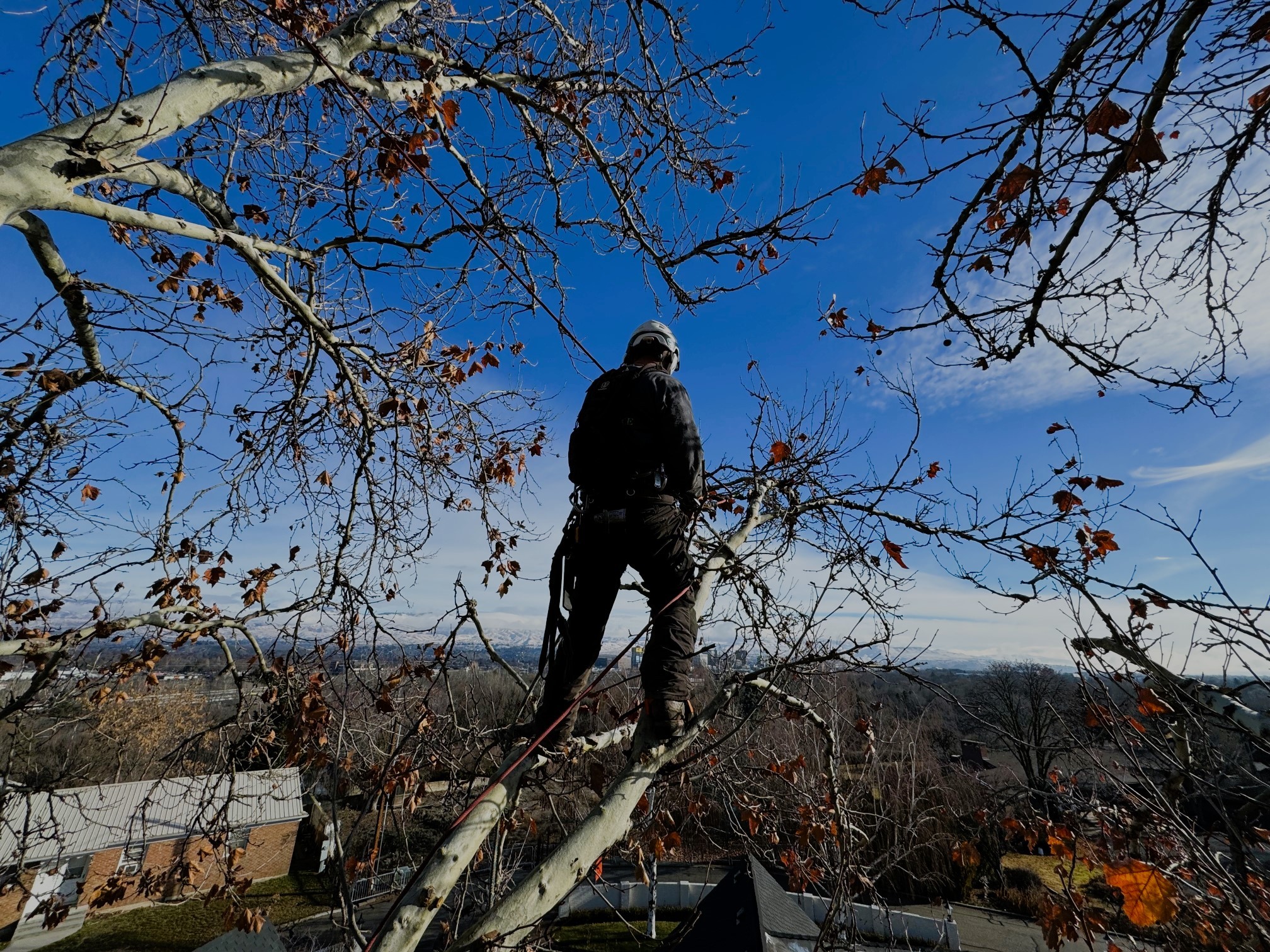
Tree Removal vs. Tree Trimming/Pruning
How to Tell Which One Your Tree Actually Needs
Standing in your backyard looking up at a tree that doesn’t look quite right, it’s hard to know if you’re dealing with a quick trim or a full removal. That uncertainty costs homeowners money every summer in the Treasure Valley, either from over-paying for removal on a tree that could’ve been saved, or from waiting too long on a tree that needed to come down before it caused real damage.
Here’s how to actually tell the difference, and why getting this call wrong matters more in our climate than people think.
What Tree Trimming/Pruning Actually Fixes
Trimming (sometimes called pruning) removes specific parts of a tree while leaving the structure intact. A certified arborist prunes for a few reasons: removing deadwood before it falls, reducing a canopy that’s become too overextended, reducing branches that have poor branch attachment angles,removal of branches with severe defects,, and re-directing growth away from rooflines, power lines, or walkways.
In Boise’s high-desert climate, summer trimming has to be done carefully. Cutting too much canopy during peak heat removes the shade a tree uses to regulate its own water loss, which can push an already drought-stressed tree further into trouble. A trained arborist knows how much to take and when, which is one of the bigger arguments for hiring rather than doing it yourself.
Trimming/pruning is the right call when:
Deadwood is limited to a handful of branches, not entire sections of the canopy
The tree’s trunk and root structure are sound
Growth is interfering with structures, sightlines, or other plants, but the tree itself is healthy
You’re dealing with general overgrowth,or storm-damaged branches after one of our summer windstorms
What Actually Calls for Removal
Removal is the right call when the tree itself, not just a few branches, has become a liability. A few signs that point toward removal instead of trimming:
More than half the canopy is dead or declining. Once a tree loses over 50% of its live canopy, trimming away the dead parts often leaves a structurally unstable skeleton that isn’t worth keeping.
The trunk shows large cavities, deep cracks, or fungal growth at the base. These are signs of internal decay that trimming/pruning can’t fix. A hollow or rotting trunk is a falling hazard regardless of how healthy the leaves look. Pruning can sometimes reduce loading on these defects, to bring failure at defect to within an acceptable risk threshold.
The tree is leaning more than it used to, especially after a storm. A new or worsening lean usually means root failure underground, which trimming/pruning the canopy won’t correct. Inspection of tree with a “new lean” is important, as we have seen far too many removals of trees that have a lean due to growing conditions, with the homeowner not noticing the lean as the tree developed.
Bark beetles or other boring insects have moved in. Pine and fir trees across the Treasure Valley are vulnerable to bark beetles, especially trees already stressed by drought. Once a beetle infestation has progressed past the early stage, the tree is usually beyond saving and becomes a risk to neighboring trees if it stays standing.
Roots have been damaged by construction, trenching, or grade changes. If a tree’s root system has been compromised, especially common during new builds in Meridian and Eagle, the tree may look fine above ground while it’s already failing below it.
It’s growing into a structure, foundation, or septic system. Sometimes the tree is healthy. The location is the problem.
The Gray Area: When a Damaged Tree Might Still Be Savable
Not every damaged tree needs to come down. If a tree has a split trunk or a major limb at risk of failure, but the rest of the tree is structurally sound, cabling and bracing can sometimes redistribute the load and extend the tree’s life by years. This is a separate decision from trimming/pruning, and it’s worth a dedicated conversation with an arborist before assuming removal is the only option.
Cost and Timeline Differences
Trimming is almost always faster and cheaper than removal. A standard trim on a mature tree typically takes a few hours, while removal involves more equipment, more labor, and often a crane or rigging setup depending on the tree’s size and how close it is to structures. Removal also usually includes stump grinding or stump removal as a follow-up step, which adds to both the cost and the timeline.
If you’re only treating symptoms (cutting back dead branches every year without addressing why they keep dying), you may be spending trim money repeatedly on a tree that needs to come down once.
Get an Honest Read Before You Commit Either Way
The fastest way to make the wrong call here is guessing from the ground. Double J Tree Service sends ISA Certified Arborists out to look at the whole picture: canopy, trunk, root zone, and surrounding conditions, before recommending trimming or removal. We serve Kuna and the greater Boise metro, including Meridian, Eagle, Nampa, and Caldwell, and we’ll tell you straight if a tree can be saved or if it’s time to take it down.
If you’ve got a tree you’re not sure about, reach out and we’ll come take a look.